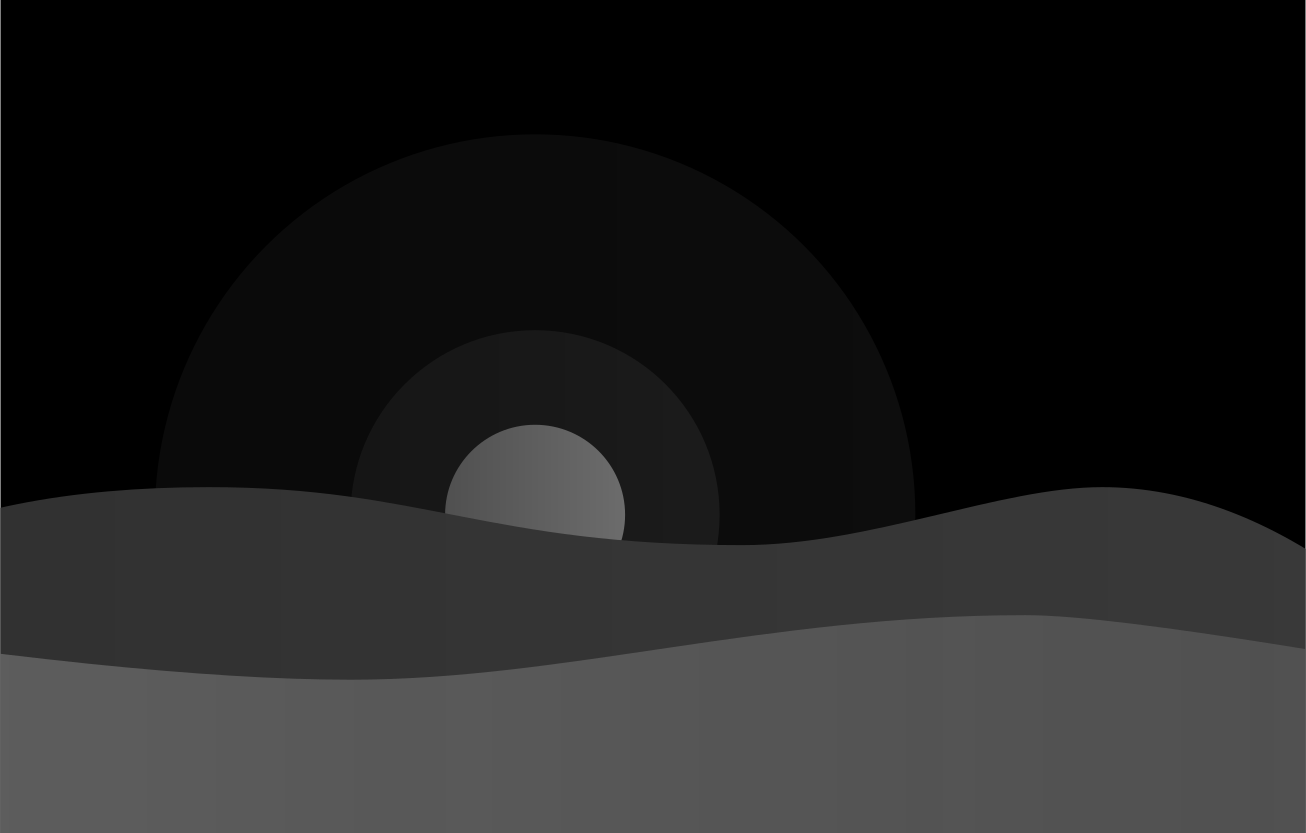
Liquid chrome
Create a React application using react-three-fiber and three.js that renders a full-screen, interactive liquid surface simulation.
Core Simulation Logic:
- Implement a GPU-based 'Ping-Pong' FBO (Frame Buffer Object) simulation to solve the wave equation.
- Use a Simulation Shader that tracks height (Red channel) and velocity (Green channel). It should propagate waves using a neighbor-average (Laplacian) approach and apply viscosity damping.
- Mouse clicks or touch drag events should write to the simulation texture to create ripples.
Rendering & Aesthetics:
- Use a Render Shader that calculates surface normals dynamically based on the simulation height map.
- Implement 11 distinct visual modes, switchable via Arrow Keys. The modes must include:
- Dark Chrome: Cinematic metallic look with subtle film grain.
- Holographic: Iridescent rainbow colors based on Fresnel angle with faint digital noise.
- Molten Gold: High-contrast gold with sharp specular highlights.
- Midnight Ocean: Deep blue/teal colors.
- Vaporwave: Pink-to-cyan gradient, a retro grid reflection effect, heavy CRT static fuzz, and scanlines.
- Radioactive Slime: Glowing toxic green.
- Oil Slick: Dark surface with turbulent interference patterns and gritty texture.
- Magma: Cracks of hot glowing lava cooling into dark rock.
- Glacial: Icy white/blue with sharp refraction.
- Deep Space: Dark nebula look with sparkling stars and high ISO sensor noise.
- Thermal Burst: A specific grainy aesthetic featuring a deep blue background transitioning to electric blue, magma orange, and core white based on wave height, overlaid with heavy animated film grain.
Technical Constraints:
- The simulation resolution should be around 512x512.
- Include a generic noise/grain function in the shader to apply retro 'fuzz' to specific modes (Vaporwave, Oil Slick, Deep Space, etc.).
- Ensure the canvas is full-screen and handles device pixel ratio correctly.
Google AI Studio
rare_prompts

